What GDPR Requires When It Comes to Document Destruction
Irish businesses generate sensitive information on paper every day. Customer account details, invoices, delivery dockets, order forms, patient notes, consent and application forms, printed correspondence, notes taken in meetings and calls.
This is not archived material. It is current information used for a short period. A large proportion of it constitutes personal data under GDPR, and it must be disposed of securely.
Information that is generated continuously has to be dealt with on a regular basis. That is what a regular shredding service is for.
What a regular shredding service is
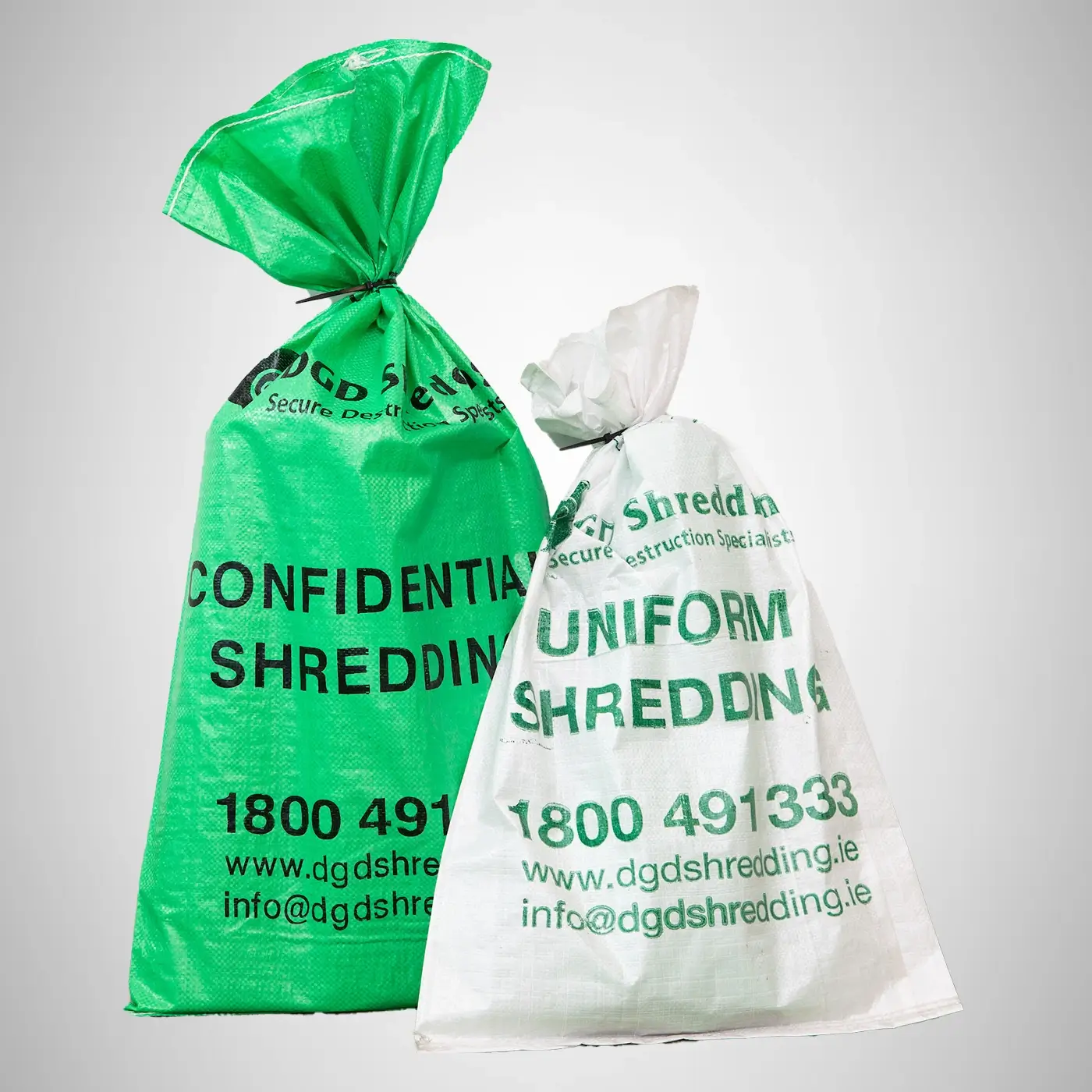
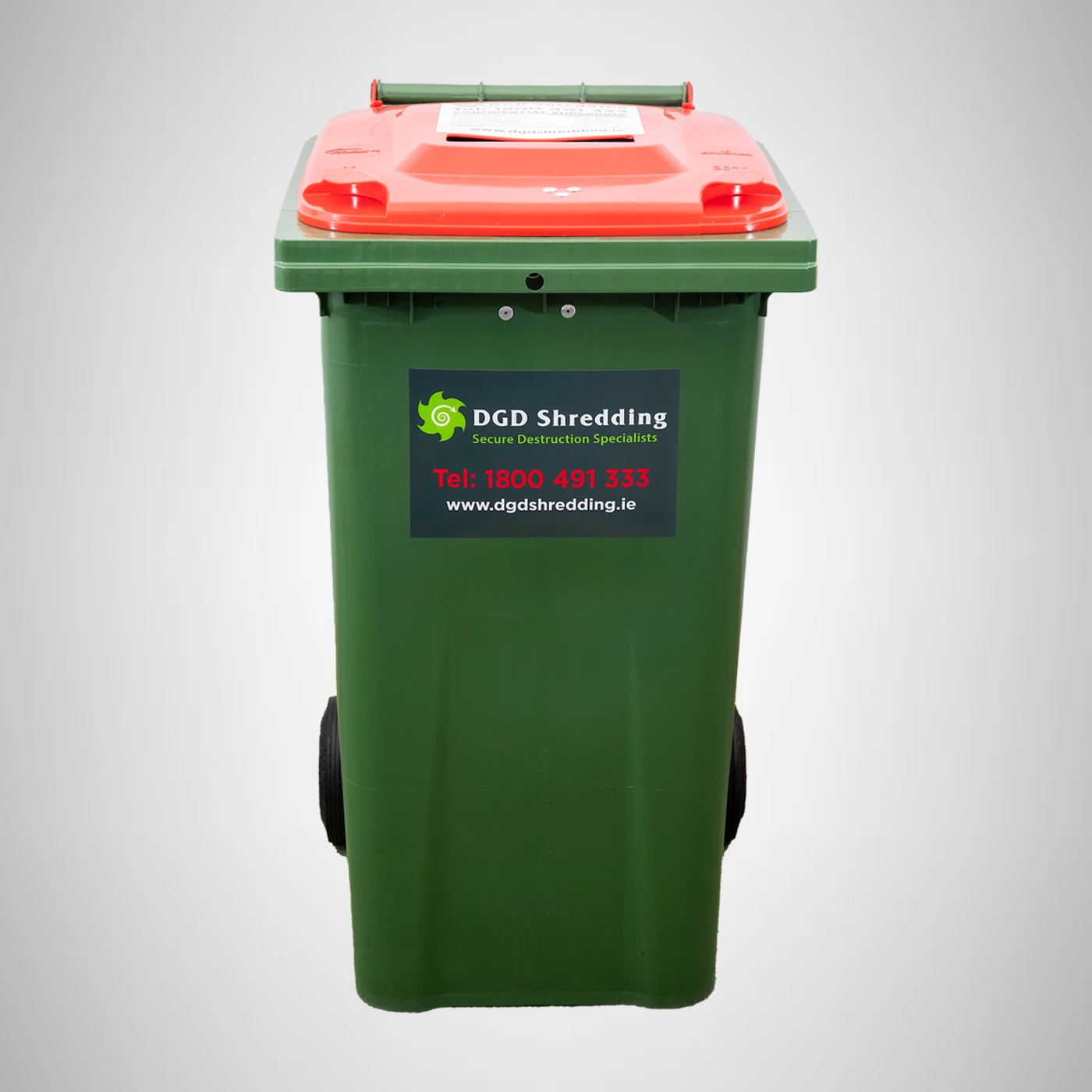
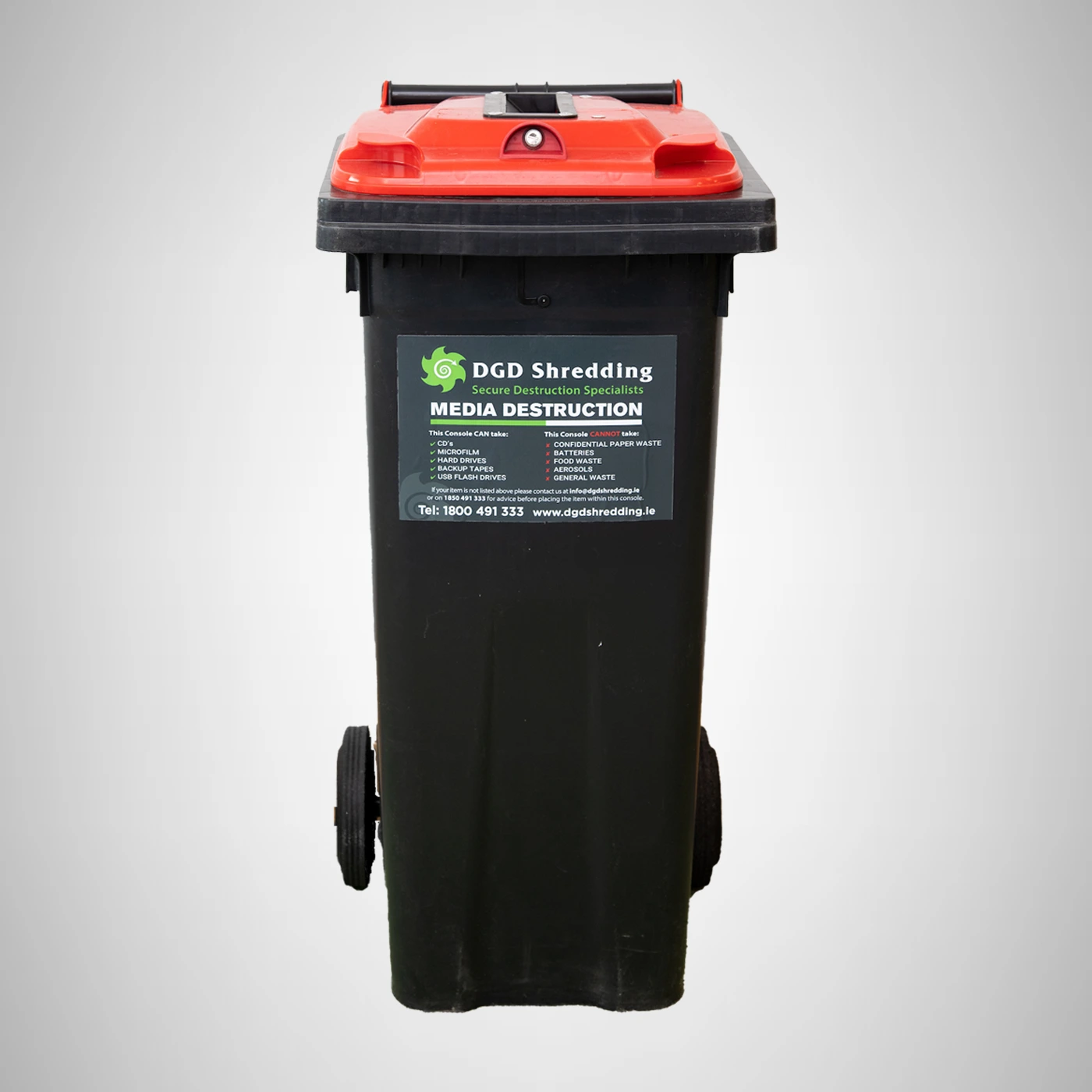
A regular shredding service is a scheduled, ongoing arrangement. Lockable consoles are placed at the points in the building where confidential paper is actually generated, beside printers, in reception, in HR, in accounts. Staff deposit documents into the consoles. On an agreed schedule, those consoles are emptied, and the contents are destroyed to a certified standard.
The Data Protection Commission advises data controllers to set security measures ensuring sensitive data & documents are stored securely prior to collection.
Controlling access to records and data is exactly what lockable consoles and bins do. Confidential material is secured from the moment it is deposited in the receptacle.

The problem with shredding only occasionally
Sensitive information is generated continuously. If destruction happens only occasionally, every document has to wait somewhere in between. On a desk, in an open tray, in an unlocked drawer, or in an office bin that anyone can reach into.
That waiting period is the risk window. The longer the interval between collections, the more current personal data is sitting exposed.
Day-to-day paperwork tends to be set down in open, busy parts of the building where it is visible to anyone passing through. Exposure of this kind is almost always accidental rather than deliberate. Most workplaces also have no dedicated, lockable point for confidential paper, so the default becomes whatever is nearest.
A regular service removes the decision, because the paper leaves the building on a fixed cycle regardless of who remembers to arrange it.
Choosing the right frequency
The right frequency depends on how much confidential paper the business generates and how sensitive it is. In practice, most arrangements fall into one of four patterns.
- Weekly: Suits high-volume or highly regulated environments. Busy medical practices, legal firms, accountancy practices, recruitment agencies, financial services, and any site with a large administrative team.
- Fortnightly: A common middle ground for established SMEs with steady paper output and several departments generating records.
- Monthly: Works well for smaller offices, professional practices, and businesses where confidential paper is real but not constant.
- Quarterly: Suits sites with low output, or as a baseline that can be supplemented with on-demand collections when a project or archive clear-out comes up.
On-site or off-site
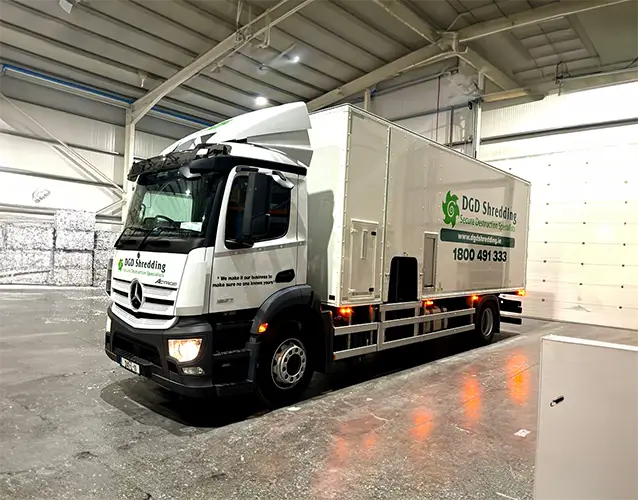
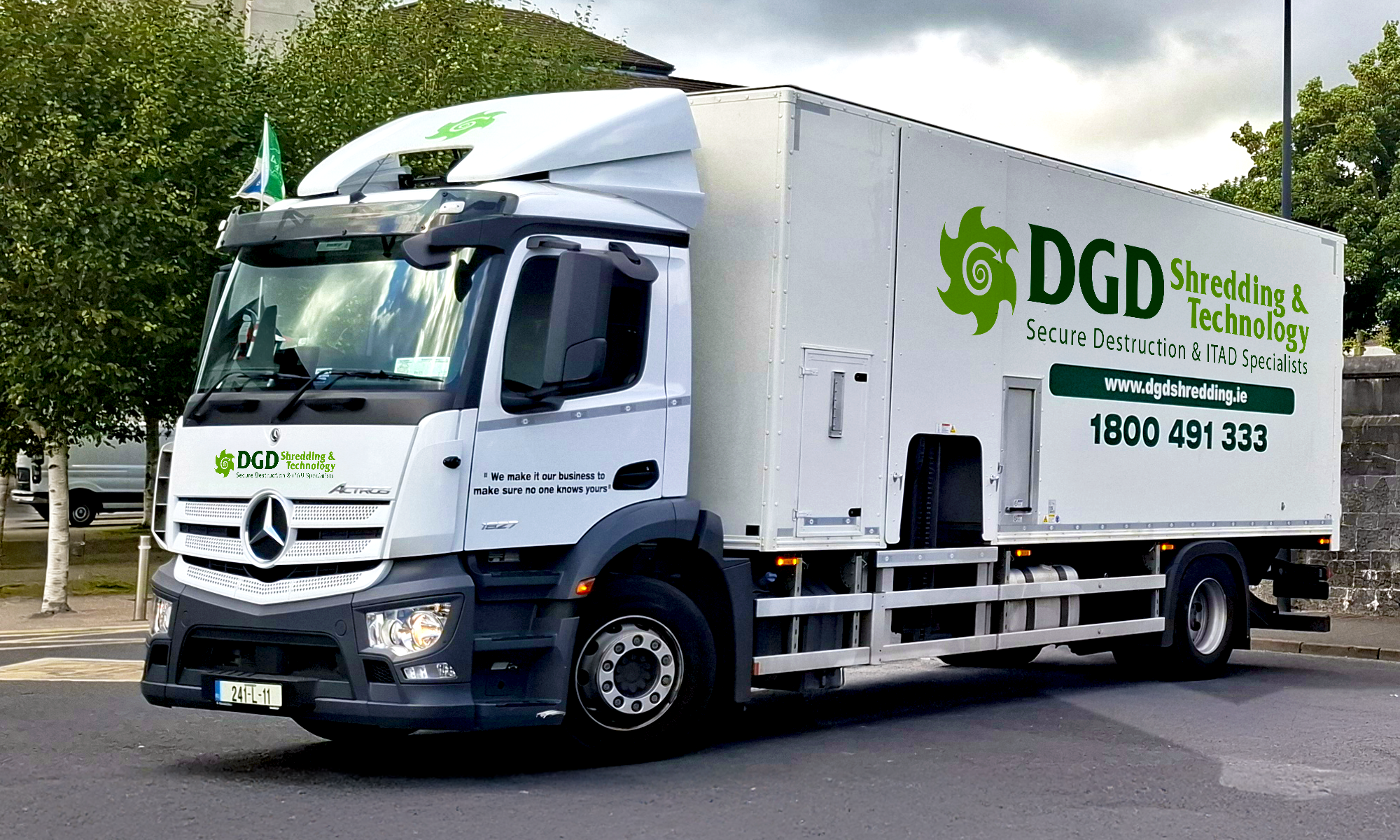
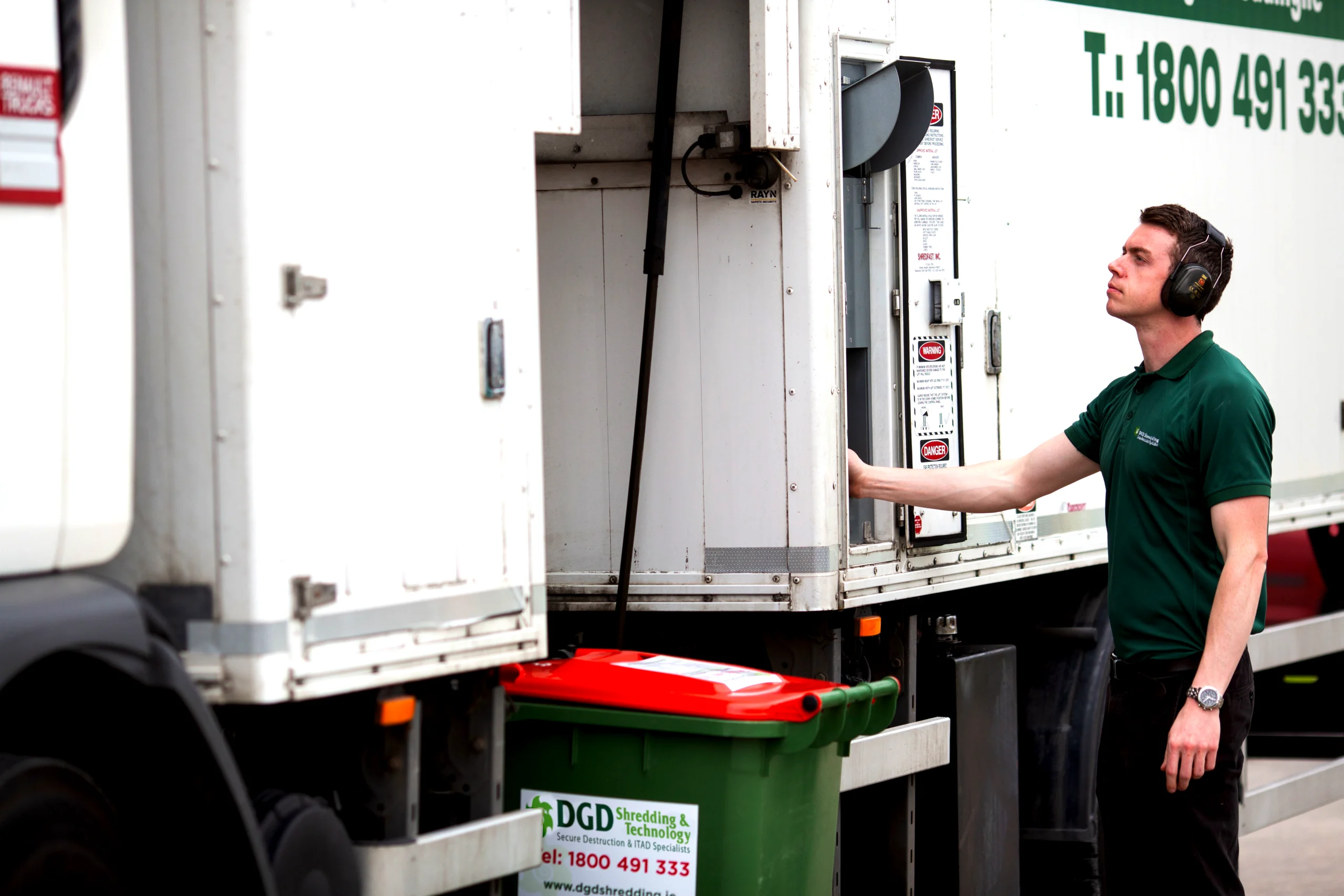
A regular service can be delivered either on-site or off-site. Shredding can happen at your premises in a mobile unit, or documents can be transported under secure chain of custody and destroyed at a dedicated facility. Both can be certified, and both can run on a fixed schedule.
The choice comes down to volume, cost, and whether witnessed destruction matters to your compliance position. That comparison is covered in full in our article on on-site versus off-site shredding.
What you should expect from any regular service
Whoever you use, a scheduled arrangement should include the following as standard.
- Lockable consoles and bins appropriate to your volume and layout
- A fixed, agreed collection schedule
- Destruction to the EN 15713 standard for secure destruction
- Vetted, identifiable operatives
- A documented chain of custody from collection to destruction
- A Certificate of Destruction issued for every collection
- Recycling of the shredded material rather than landfill disposal
The Certificate of Destruction matters more than most businesses realise. If the Data Protection Commission ever asks how a particular set of records was disposed of, that certificate is the evidence. A verbal assurance that the files were shredded at some point is not.
It applies to every size of business
Regular shredding is often assumed to be something only large organisations need. A four-person practice handling client financial details carries the same GDPR obligation as a two-hundred-person company, and the same exposure if those details end up somewhere they should not. The scale of the service changes, but the obligation does not.
Regular scheduled shredding from DGD
DGD Shredding & Technology provides regular scheduled shredding services to businesses of every size across Ireland, in both on-site and off-site formats. Consoles and bins are supplied, collections run to an agreed schedule, destruction is carried out to certified standards, and a Certificate of Destruction is issued for every collection.
If you are not sure what frequency suits your business, we can assess your volume and layout and recommend a schedule.
Get in touch to find out more about our Regular Schedule Service in Secure Shredding, ITAD and lifecycle services at dgdshredding.ie or dgdtechnology.ie or call 1800 491 333
About DGD Shredding & Technology
DGD Shredding & Technology has protected confidential information since 1998, growing into one of Ireland’s largest and most established secure destruction providers. From paper and confidential waste to IT Asset Disposition and full lifecycle management, we help businesses across Ireland stay secure and compliant. We make it our business to make sure no one knows yours.
Want to see what our services can do for you?
Explore our Shredding Services or find out more about ITAD & Lifecycle Solutions.
Find out how we can help your business? Talk to the team at sales@dgdshredding.ie or call 1800 491 333.